Stakeholders Debate Eswatini’s Capacity Needs for Biodiversity Conservation
By Editorial · April 8, 2026
The Question Facing Eswatini: Does the Country Have the Capacity to Mitigate Environmental Degradation?
A critical national dialogue is underway at King Sobhuza Memorial Park in Lobamba, where a diverse group of stakeholders has convened to examine Eswatini’s readiness to address biodiversity loss and environmental degradation. The Validation Workshop on the Capacity Development and Resource Needs Assessment and Capacity Building Action Plan has drawn participation from government, civil society, academia, the private sector and the media, reflecting a broad-based commitment to environmental sustainability.
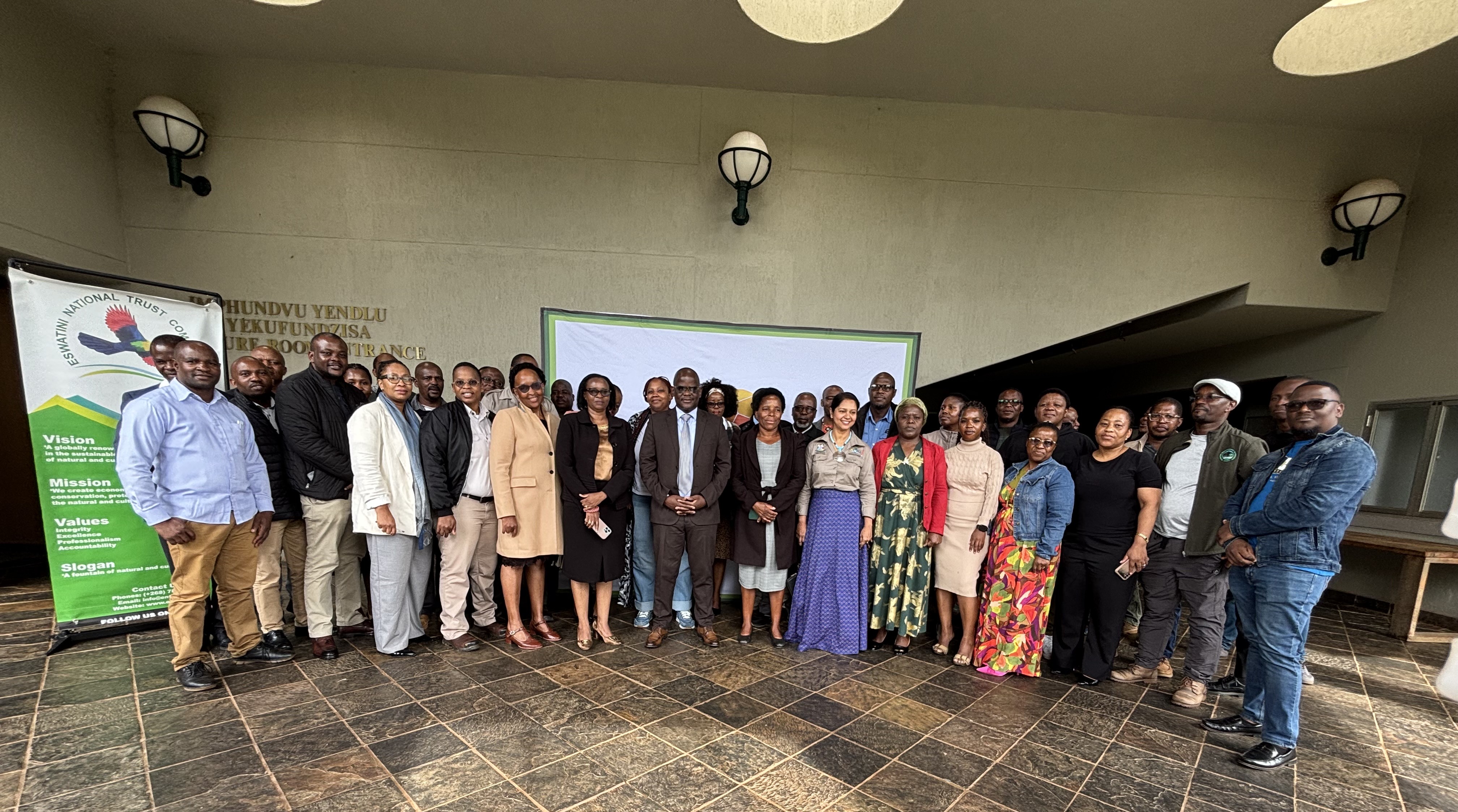
Stakeholders at the Validation Workshop on the Capacity Development and Resource Needs Assessment and Capacity Building Action Plan
At the centre of the discussions is a pressing question: whether Eswatini possesses the necessary capacity to effectively conserve its biodiversity and meet its global commitments under the Kunming–Montreal Global Biodiversity Framework. In opening remarks delivered by the ENTC Chief Executive Officer’s representative, Mduduzi Ndzinisa, it was emphasised that global frameworks alone cannot drive change without corresponding national capacity. It was stated that translating global ambitions into meaningful outcomes requires more than policy commitments, and instead depends on the presence of strong institutions, skilled professionals, coordinated stakeholder engagement and sustainable financing mechanisms. The assessment under review was described as a strategic instrument designed to strengthen the people, institutions and systems required to deliver measurable biodiversity outcomes across the country. The remarks further underscored the central role of biodiversity in Eswatini’s development trajectory. It was noted that ecosystems underpin critical sectors, including water security, climate resilience, agriculture, tourism and disaster risk reduction. However, it was also acknowledged that the country continues to face significant challenges, including habitat loss, climate pressures, limited technical expertise and constrained financial resources. These concerns were echoed throughout the workshop discussions, where stakeholders engaged with the findings of the assessment and reflected on the realities on the ground. Particular attention was drawn to the Lubombo Biosphere Reserve, which was presented as a case study illustrating the scale of environmental pressures facing the country. It was explained that alien and invasive plant species are increasingly encroaching on indigenous ecosystems, disrupting ecological balance and accelerating biodiversity loss. The situation in Lubombo was described as indicative of a broader national trend, where environmental degradation continues despite the existence of policy frameworks and technical strategies. While experts have developed approaches to manage invasive species and restore ecosystems, the challenge lies in translating these strategies into sustained, large-scale action. The assessment being validated identifies capacity gaps across three key levels: systemic, institutional and individual. At the systemic level, challenges relate to policy implementation, coordination mechanisms and resource allocation. At the institutional level, limitations include staffing constraints, inadequate infrastructure and insufficient integration of biodiversity considerations across sectors. At the individual level, there is a shortage of specialised skills required to address complex environmental issues, including ecosystem restoration, spatial planning and biodiversity monitoring. Stakeholders highlighted that addressing these gaps will require targeted investment in capacity development. This includes strengthening institutional frameworks, enhancing technical and scientific expertise, securing sustainable financing and improving coordination among sectors such as agriculture, water, infrastructure and urban development. There was a shared recognition that biodiversity conservation cannot be treated as a standalone environmental issue, but must be integrated into national development planning. The need for inclusive approaches that involve local communities, traditional authorities and other key actors was also emphasised, particularly given their role in managing natural resources on a significant portion of the country’s land. The workshop is expected to play a pivotal role in refining the Capacity Development and Resource Needs Assessment and ensuring that it reflects national priorities and realities. It also provides a platform for stakeholders to align on a common vision and to contribute to a practical roadmap for biodiversity conservation and sustainable resource management. As deliberations continue, a clear consensus is emerging: while Eswatini has made progress in establishing policy frameworks and strategic plans, the effectiveness of these instruments will ultimately depend on the country’s ability to build and sustain the capacity required for implementation. The discussions in Lobamba signal a growing awareness that the path towards achieving biodiversity targets by 2030 will require not only ambition, but also coordinated action, adequate resourcing and a long-term commitment to strengthening national systems.