
Is the world going green or is the green going?
By Editorial · April 20, 2026
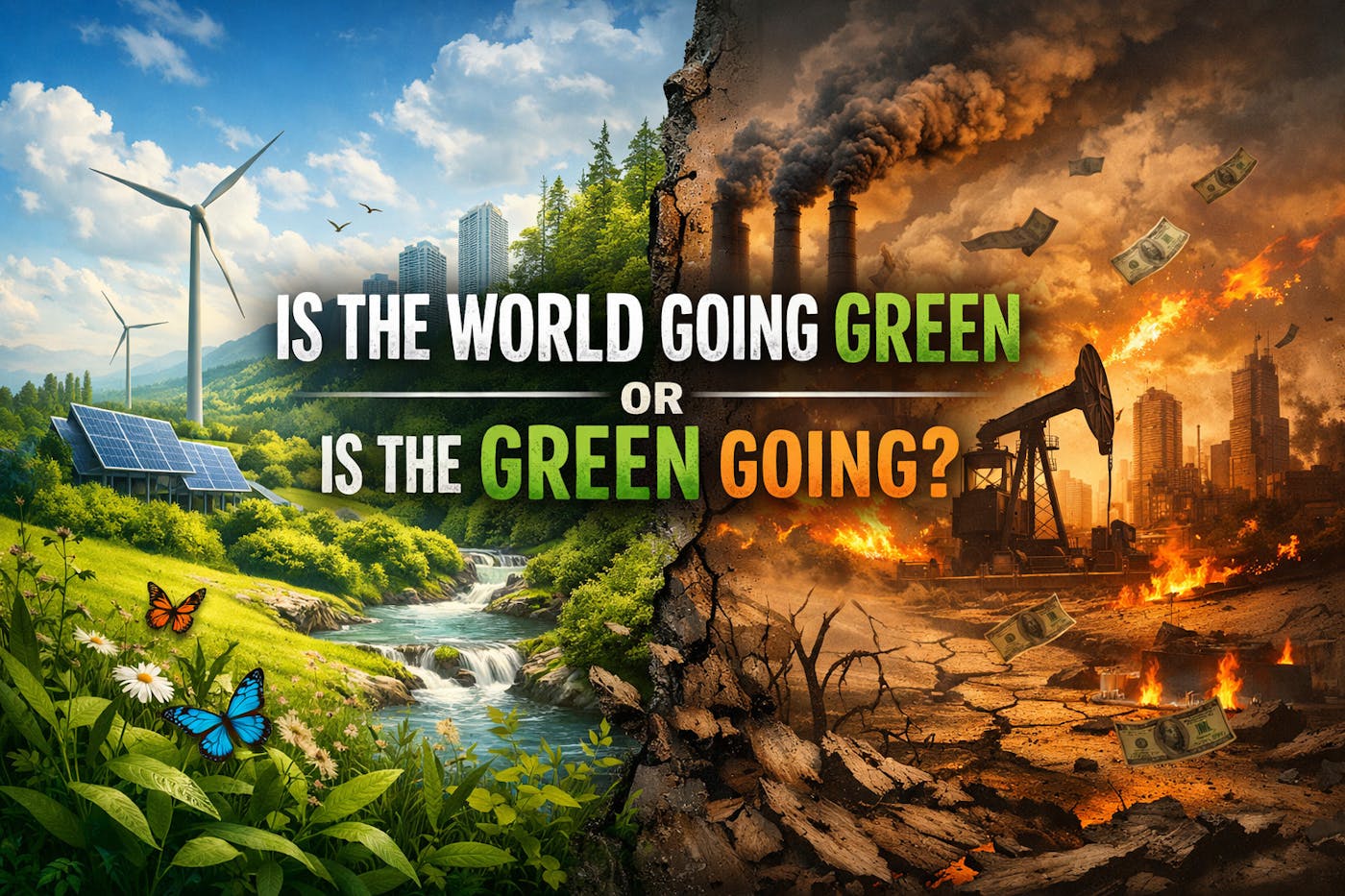
As climate crises worsen and green promises collide with political and economic realities, the question is no longer whether the world is going green- but whether the green is quietly going.
Despite decades of global pledges and binding agreements to curb climate change and halt biodiversity loss, questions remain over how much progress the world has truly made. Experts continue to debate whether these efforts are delivering real impact or falling short of their ambitious promises.
Debating on the platform Climate Change/ESG Professionals group on LinkedIn, the experts were discussing whether the world was really going green or the green was going? Simply unpacking this, the group discussed whether greenhouse gas emissions have now significantly decreased or not, contributing to the loss of biodiversity, despite global binding agreements and strategies. Expressing his elaborate point, Environmentalist Nirmal Jival Shah first noted that despite the world having more than 200 environmental-related agreements, there was a question of whether these were fully active.
Shah first explained that Multilateral Environmental Agreements (MEAs) were international agreements between countries, designed to address transboundary environmental issues. “The number of MEAs is eye-watering, with more than 250 currently in force. They are supposed to be central to global efforts to address environmental impacts, but carbon dioxide is increasing, and biodiversity is declining. Pollution of various kinds is at dangerous levels. The world is still struggling with the safe disposal of waste. Land is being degraded at an astonishing speed and scale. “As regards biodiversity conservation, the Convention on Biological Diversity (CBD) has indeed raised awareness, fostered national strategies, and mobilised conservation funding. However, most global biodiversity targets, including the Aichi Targets (2011–2020), were unmet. Habitat destruction, overexploitation, invasive species, and pollution continue largely unabated. Weak enforcement, insufficient political will, and inadequate financing have severely undermined progress,” explained Shah. The environmentalist further debated that everyone knew what was happening with efforts to combat climate change. “The United Nations Framework Convention on Climate Change (UNFCCC) and the Paris Agreement have united nearly all nations under a shared goal of limiting global warming. They have accelerated renewable energy adoption, enhanced climate science cooperation, and driven net-zero pledges. Yet, global emissions remain high, and the temperature rise is approaching the 1.5°C target. The voluntary nature of commitments, lack of binding sanctions, national self-interest, and geopolitical tensions have limited effectiveness. Small Island States, victims not perpetrators of climate change, are disproportionately affected. “The most widely recognised success story among MEAs is the Montreal Protocol on Substances that Deplete the Ozone Layer (1987). It achieved what it set out to do - it reversed damage to the ozone layer. I am familiar with this MEA because my company, ENVI.R.O, produced the Seychelles' first national phase-out plan for ozone-depleting substances (sic),” he further explained. He concluded that it was worth considering the factors that made the Montreal Protocol successful, which included the clear scientific evidence and strong public concern, economic feasibility and industry cooperation, legally binding but flexible and fair, financial and technical support, and clear, measurable goals; effective monitoring and enforcement.
When sought for comment, Hlumisa Youth Climate Network Co-Founder and Managing Director Tamika Du-Pont said the efforts to implement eco-friendly efforts existed; however, they were not enough to adapt and mitigate the climate crisis. Worth noting is that Du-Pont is a climate change and sustainable specialist whose work has been echoed both in Eswatini and South Africa. "The Government of Eswatini and policymakers have developed strategies to protect the environment, and some of them are being implemented successfully. However, more work seems to be needed in enforcing environmental laws and/or policies to see more greening in Eswatini,” briefly commented Du-Pont.

Hlumisa Youth Climate Network Co-Founder and Managing Director Tamika Du-Pont.
According to Greenly Earth, going green is a term used to describe people making a genuine effort to reduce their environmental impact and encourage others around them to do the same.
Going green brings a wide range of benefits that extend to individuals, communities, and the planet. By reducing pollution, people contribute to cleaner air and healthier environments. Choosing sustainable transportation, such as electric vehicles or public transit, minimises greenhouse gases and harmful emissions. Cutting back on waste is another major benefit, as avoiding single-use plastics and promoting recycling reduces the strain on landfills and encourages more sustainable consumption. Conservation of natural resources also plays a vital role; simple actions like switching off unused lights, taking shorter showers, and adopting renewable energy or energy-efficient appliances save water and reduce reliance on fossil fuels.
Beyond personal benefits, going green helps protect wildlife and ecosystems. Conscious choices, such as avoiding products linked to deforestation, contribute to preserving forests and the biodiversity within them. While some green practices may require initial investment, they ultimately save money by lowering fuel, utility, and household costs. Finally, adopting a greener lifestyle often leads to healthier living. Choosing plant-based meals rich in fresh fruits and vegetables not only supports sustainability but also improves personal health. In essence, going green fosters cleaner environments, stronger ecosystems, economic savings, and healthier lifestyles.