
Beyond the Smoke: Why Tackling Persistent Pollutants Matters for Eswatini
By Phumelele Mkhonta · July 9, 2026
The deadliest pollution is often the one which cannot be seen. As Eswatini confronts Persistent Organic Pollutants, the nation is choosing cleaner air, healthier lives and a future where invisible toxins no longer shape tomorrow.
Some of the greatest environmental threats cannot be seen. They have no colour, no scent strong enough to raise alarm, and no immediate warning signs. Yet they quietly accumulate in the air we breathe, the water we drink, the soil that feeds us, and ultimately, in our own bodies.
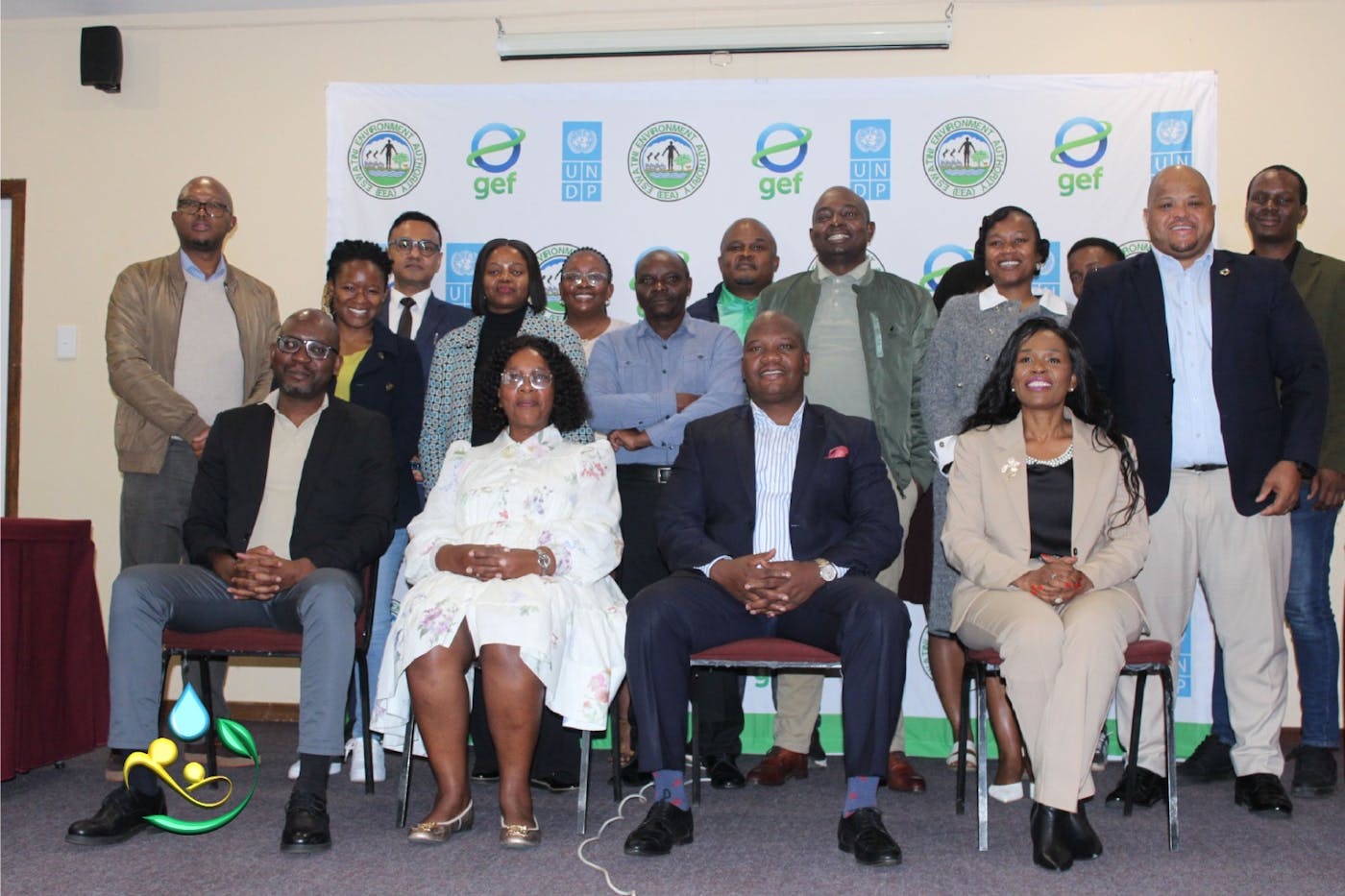
It is this invisible danger that brought government officials, environmental experts, academia and development partners to Bethel Court in Ezulwini on Wednesday, where the Eswatini Environment Authority (EEA) officially kicked off the implementation of the "Reduced Risks on Human Health and the Environment through the Reduction of POPs and UPOPs in Eswatini" project.
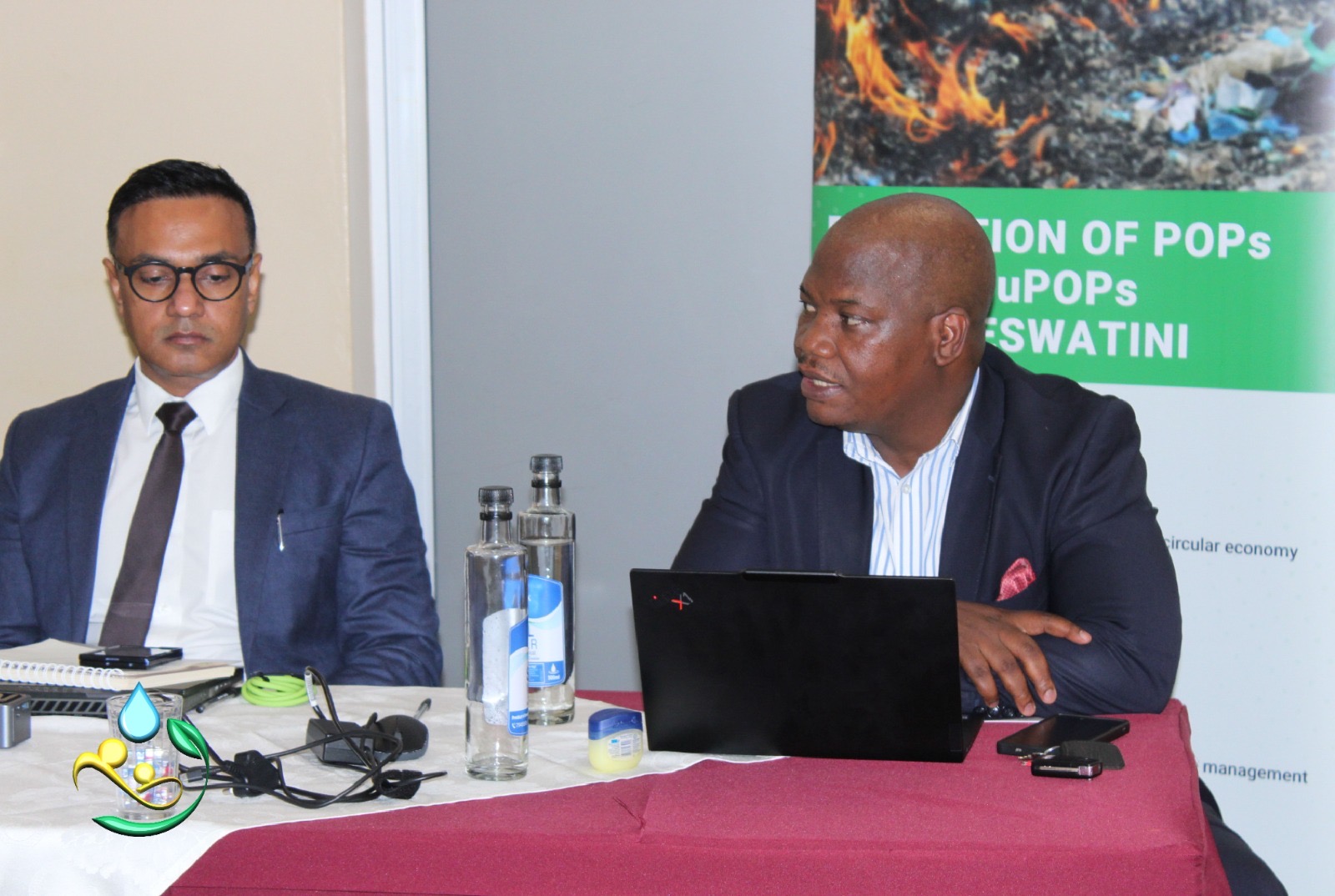 EEA Executive Director Gcina Isaac Dladla (R) with a consultant.
The meeting also introduced the newly appointed consultants from the University of Eswatini's Centre for Sustainable Energy Research (UNESWA-CSER), who have been tasked with updating Eswatini's National Persistent Organic Pollutants (POPs) Inventory and the National Implementation Plan (NIP). Their work will establish the country's current pollution baseline and guide future interventions aimed at reducing hazardous chemicals.
While the meeting marked the beginning of a technical assignment, its significance reaches far beyond conference rooms and policy documents.
At its core lies a simple question: Why should ordinary emaSwati care about Persistent Organic Pollutants? The answer begins with understanding what POPs really are.
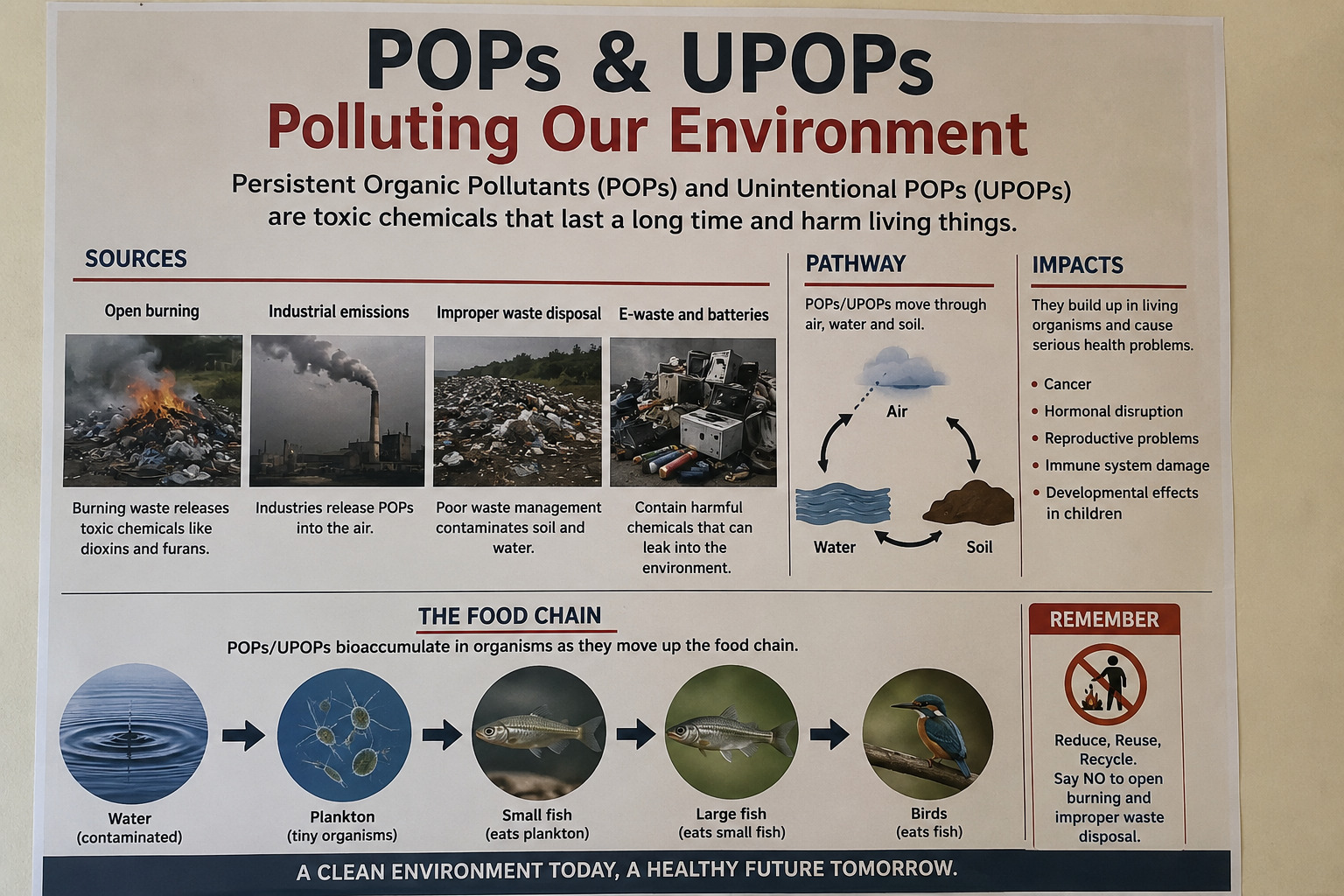
Persistent Organic Pollutants are toxic chemicals that resist natural degradation. Unlike ordinary waste that decomposes over time, these substances can remain in the environment for decades, travelling through air and water, contaminating ecosystems and accumulating in animals and humans.
Equally concerning are Unintentional Persistent Organic Pollutants (UPOPs), including highly toxic compounds such as dioxins and furans, which are released through everyday practices like the open burning of waste, poorly managed dumpsites and inadequate disposal of healthcare and electronic waste. Many people associate pollution with littered streets or dirty rivers. Yet the real danger often cannot be seen. A single pile of burning rubbish may release chemicals capable of persisting in the environment long after the flames have disappeared.
 Project Lead from EEA Linda Matola making a presentation
These pollutants have been linked globally to cancers, weakened immune systems, reproductive disorders, developmental problems in children and disruption of hormonal systems.
For a country like Eswatini, where open burning remains common in some communities and waste management systems continue to evolve, addressing these pollutants has become both an environmental and a public health priority.
Recognising this challenge, the project has secured an E84.8 million grant from the Global Environment Facility (GEF) over five years, with technical support from the United Nations Development Programme (UNDP). The initiative is being implemented by the Eswatini Environment Authority in partnership with the Ministry of Tourism and Environmental Affairs and the Ministry of Health. Rather than focusing only on pollution control, the project seeks to transform the country's entire approach to waste management by embracing the principles of a circular economy, where materials are reused, recycled and recovered instead of discarded. The investment will modernise waste management policies, strengthen legislation, introduce Extended Producer Responsibility for priority products such as packaging and electronic waste, and update Eswatini's National Implementation Plan under the Stockholm Convention.
On the ground, the project promises tangible improvements. Plans include the deployment of 500 electronic waste collection containers, 1,000 plastic waste containers, two mobile civic amenity centres, upgraded recycling and reuse facilities, and pilot community composting programmes reaching at least 1,000 households.
Healthcare facilities also stand to benefit through upgraded hazardous waste storage, 15 small-scale autoclaves for safer treatment of infectious waste, mercury-free medical equipment and improved systems for managing healthcare waste throughout its lifecycle.Importantly, the initiative extends beyond infrastructure.
It places strong emphasis on research, innovation and public awareness. A national knowledge hub and project website will be established, while communication and stakeholder engagement strategies will help ensure communities understand both the risks of hazardous pollutants and the opportunities presented by circular economy solutions.
The project also recognises that lasting environmental change cannot be delivered by government alone.
Its success depends on collaboration between ministries, municipalities, the private sector, civil society organisations, academia and development partners. Businesses are expected to invest in cleaner production and recycling systems, while researchers will generate evidence to support policy. Communities, meanwhile, have an equally vital role to play by adopting safer waste management practices and changing behaviours that contribute to pollution.
Ultimately, this initiative is about far more than chemicals. It is about protecting children from invisible toxins, safeguarding farmers whose livelihoods depend on healthy soils, preserving rivers that sustain communities and ensuring hospitals heal without inadvertently creating new environmental risks.
The smoke rising from a burning waste heap may disappear within minutes. The pollutants it releases can linger for generations. By choosing to confront that invisible threat today, Eswatini is investing not only in cleaner landscapes but also in healthier people, stronger institutions and a more resilient future. Sometimes, the most important environmental victories are not those we can see. They are the ones we can finally prevent.