
A Nation Under Waste: Landmark Study Exposes Eswatini's Deepening Pollution Crisis
By Success Nhantuve · July 23, 2026
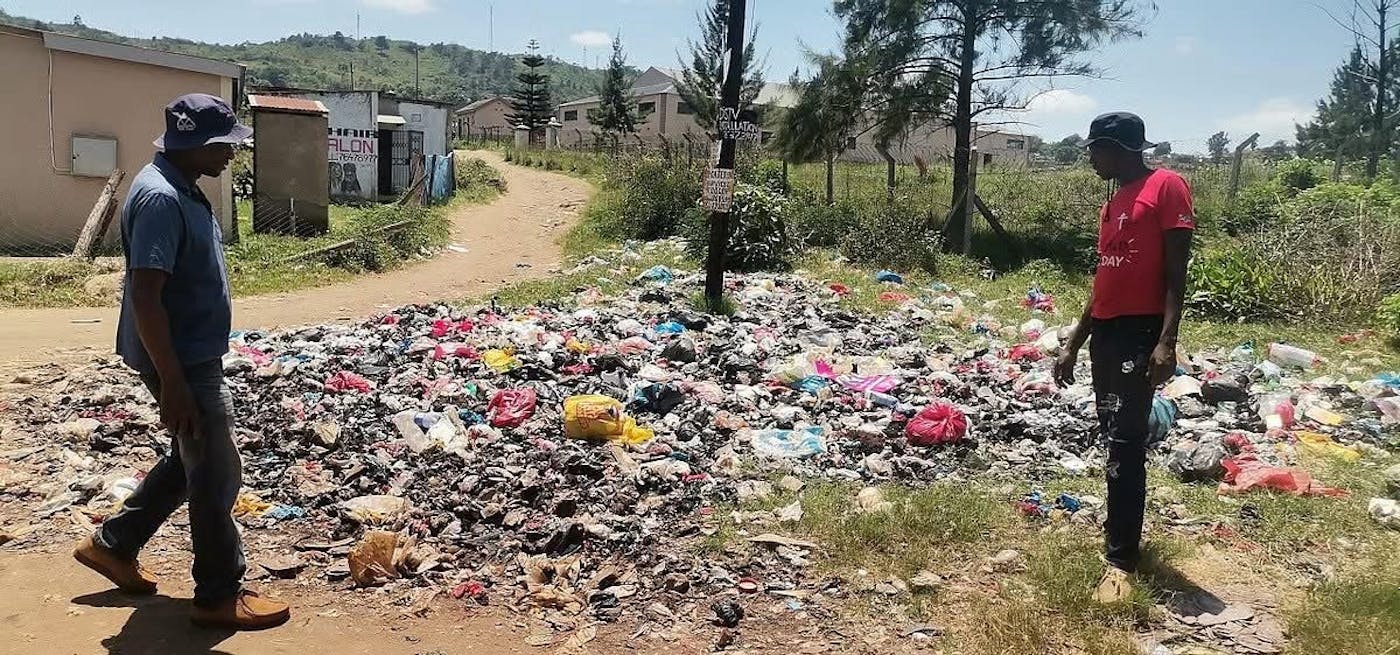
Like an unhealed wound stretching across the country's landscape, illegal dumpsites, burning refuse heaps and littered open spaces are becoming an all-too-familiar sight in Eswatini.
From bustling urban neighbourhoods to remote rural communities, waste is steadily reshaping the country's environment, threatening public health, contaminating water sources and polluting the air millions breathe every day.
 Environmental Scientist Dr Wisdom Dlamini.
Now, a groundbreaking study by Environmental Scientist Dr Wisdom Dlamini has laid bare the scale of the challenge, revealing that Eswatini's waste management crisis is not simply the result of inadequate infrastructure, but a complex web of spatial inequality, governance, service delivery and entrenched behavioural practices. The research, which Dr Dlamini describes as the first georeferenced, nationwide assessment of household waste disposal in Eswatini, analysed data from more than 2,300 enumeration areas collected during the 2017 Population and Housing Census. Through advanced spatial multivariate clustering, the study examined how households across the country manage domestic waste and how disposal practices differ according to geography, settlement type and land tenure.
A Country Divided by Waste Services One of the study's clearest findings is the stark inequality between urban and rural Eswatini. Maps generated from the research reveal that regular refuse collection is concentrated mainly within municipalities and urban centres. Large portions of the countryside—particularly areas administered under traditional authorities—remain outside formal waste collection systems. Consequently, many rural households have little choice but to burn their waste, bury it in pits or dispose of it in informal dumping sites. "We usually assume the biggest problem is a lack of infrastructure," Dr Dlamini observed. "But my research looking at how every household across Eswatini handles trash has revealed something that challenges our basic assumptions about development." According to the study, nearly three-quarters of Eswatini's population resides in rural communities, many of which fall under the jurisdiction of chiefs, tindvuna and Bantfwabenkhosi. Despite continued residential development in these areas, waste collection services have largely failed to keep pace with population growth. The result is a growing dependence on practices that contribute directly to environmental degradation. Open burning releases harmful pollutants into the atmosphere, while informal dumping contaminates soils and nearby water sources. Both practices increase health risks for communities already facing limited access to essential public services.
The Urban Surprise Perhaps the study's most unexpected finding challenges another long-held assumption- that providing refuse collection automatically eliminates unsafe waste disposal practices.
Despite having access to municipal refuse collection, almost half of urban households continue to burn their waste.
For Dr Dlamini, this finding shifts the conversation away from infrastructure alone. "This is not a failure of access; it's a failure of trust, quality and habit," he explained. "It happens because the service might be unreliable, the fees might be too high, or people are simply stuck in old ways."
The research suggests that behavioural change must accompany investments in infrastructure if Eswatini hopes to reduce pollution effectively. Reliable collection schedules, affordable service fees and stronger public awareness campaigns could prove just as important as purchasing additional refuse trucks.
Maps Tell a Disturbing Story
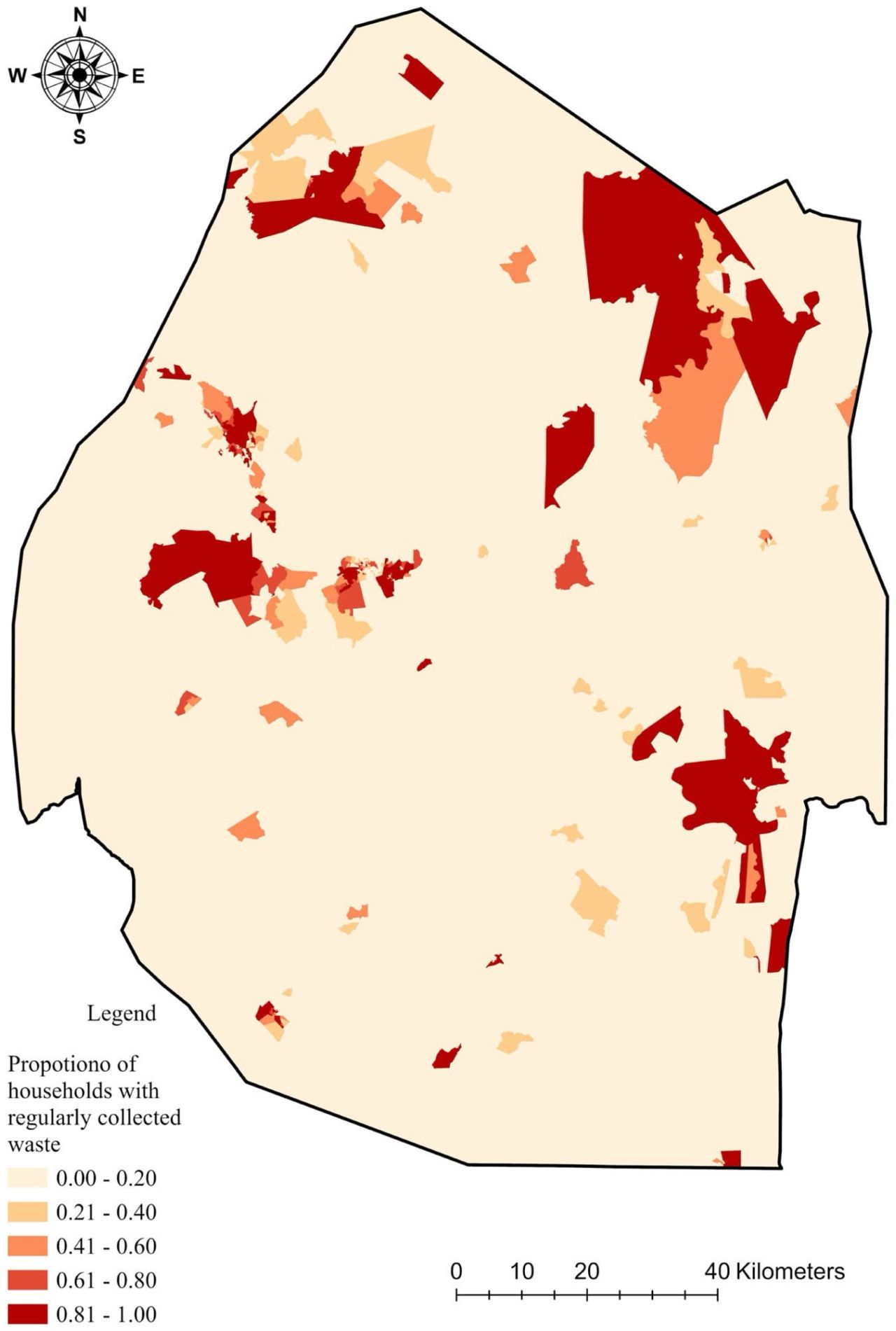
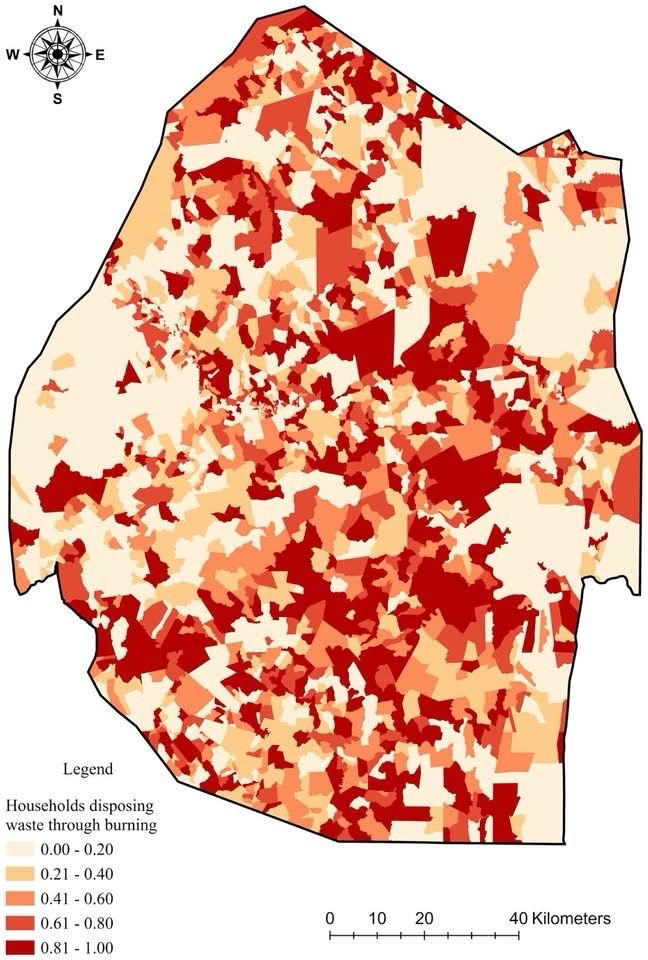 The study's spatial maps vividly illustrate the uneven distribution of waste management services throughout the country.
Areas with the highest levels of regular refuse collection are clustered around towns and municipalities, while vast rural landscapes remain underserved.
Another map highlights the widespread prevalence of household waste burning, particularly in rural Eswatini, where burning remains one of the dominant methods of disposal.
The study's spatial maps vividly illustrate the uneven distribution of waste management services throughout the country.
Areas with the highest levels of regular refuse collection are clustered around towns and municipalities, while vast rural landscapes remain underserved.
Another map highlights the widespread prevalence of household waste burning, particularly in rural Eswatini, where burning remains one of the dominant methods of disposal.
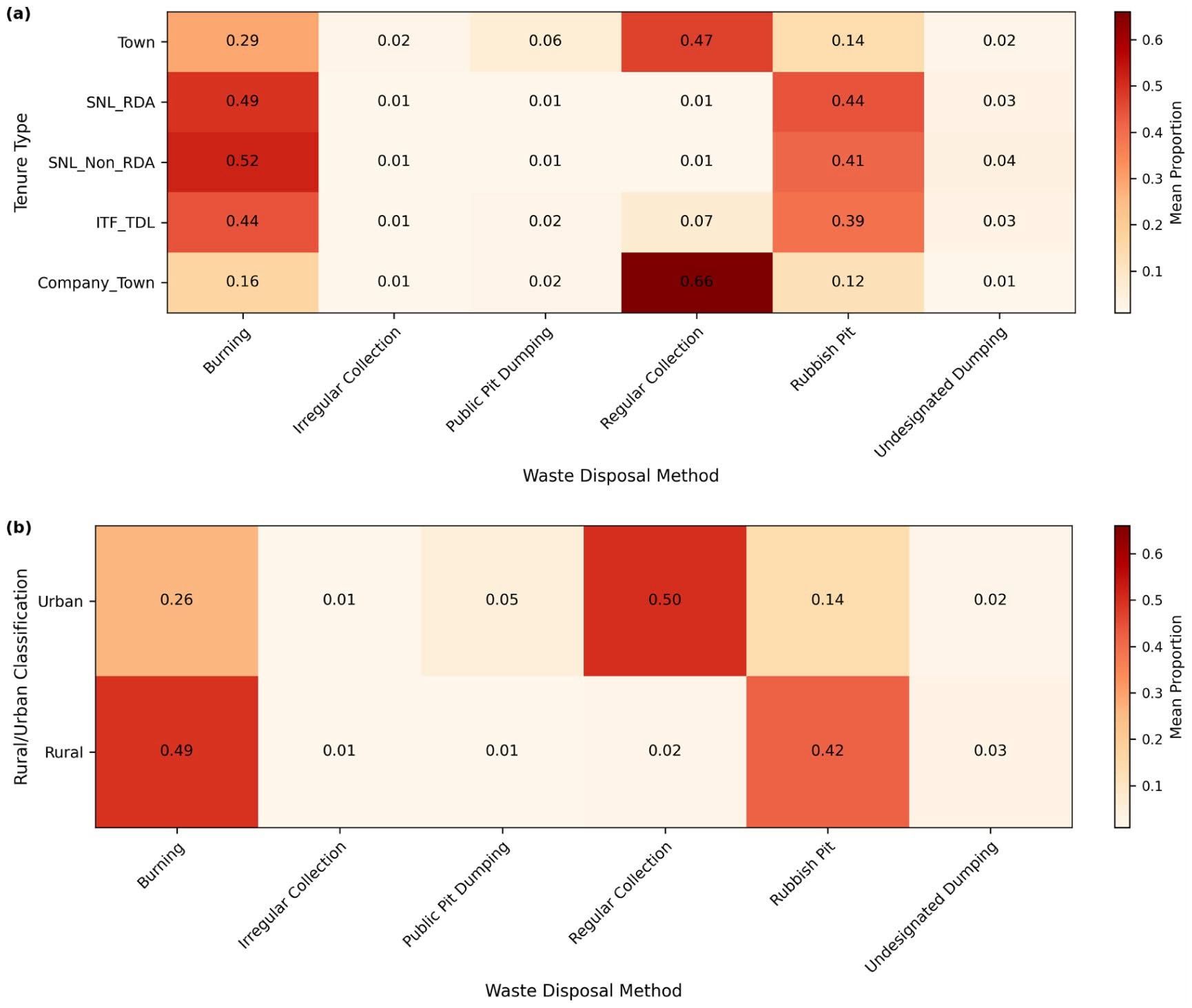
Heatmap analyses further demonstrate that waste disposal practices differ significantly according to settlement type and land tenure. Urban communities rely predominantly on regular collection services, whereas households on Swazi Nation Land are far more likely to burn refuse or dispose of it in rubbish pits due to limited alternatives. The findings underscore how geography, governance and infrastructure combine to shape environmental outcomes.
Beyond Service Delivery While inadequate infrastructure remains an important challenge, Dr Dlamini believes the findings point towards a much broader development issue. Improving waste management, he argues, will require closer collaboration between municipalities, central government, traditional authorities and communities themselves.
Simply expanding collection services will not solve the problem unless reliability improves and public confidence is restored. Likewise, rural waste management strategies must be developed alongside traditional leadership structures, recognising that many communities remain beyond the reach of municipal systems.
An Environmental and Public Health Emergency Environmental experts have long warned that uncontrolled waste disposal contributes to air pollution, greenhouse gas emissions, soil degradation and the contamination of rivers and groundwater.
Burning plastics and household refuse releases toxic chemicals that can affect respiratory health while also contributing to climate change. With illegal dumping becoming increasingly visible across many parts of Eswatini, Dr Dlamini believes the country can no longer afford to treat waste management as a purely municipal responsibility.
Instead, he argues, it must be recognised as a national environmental, health and development priority.
As Eswatini advances its climate resilience and sustainable development agenda, the study offers a timely reminder that cleaner communities will require more than infrastructure alone. They will demand coordinated action, stronger public participation and renewed partnerships between government, traditional leaders, local authorities and citizens.
Until that happens, the country's growing mountains of waste will continue to scar the landscape- silently polluting the air, contaminating the water and undermining the healthy environment every emaSwati deserves.