
Green Drought Risk Comes Under Scrutiny by Eswatini Experts
By Editorial · June 9, 2026
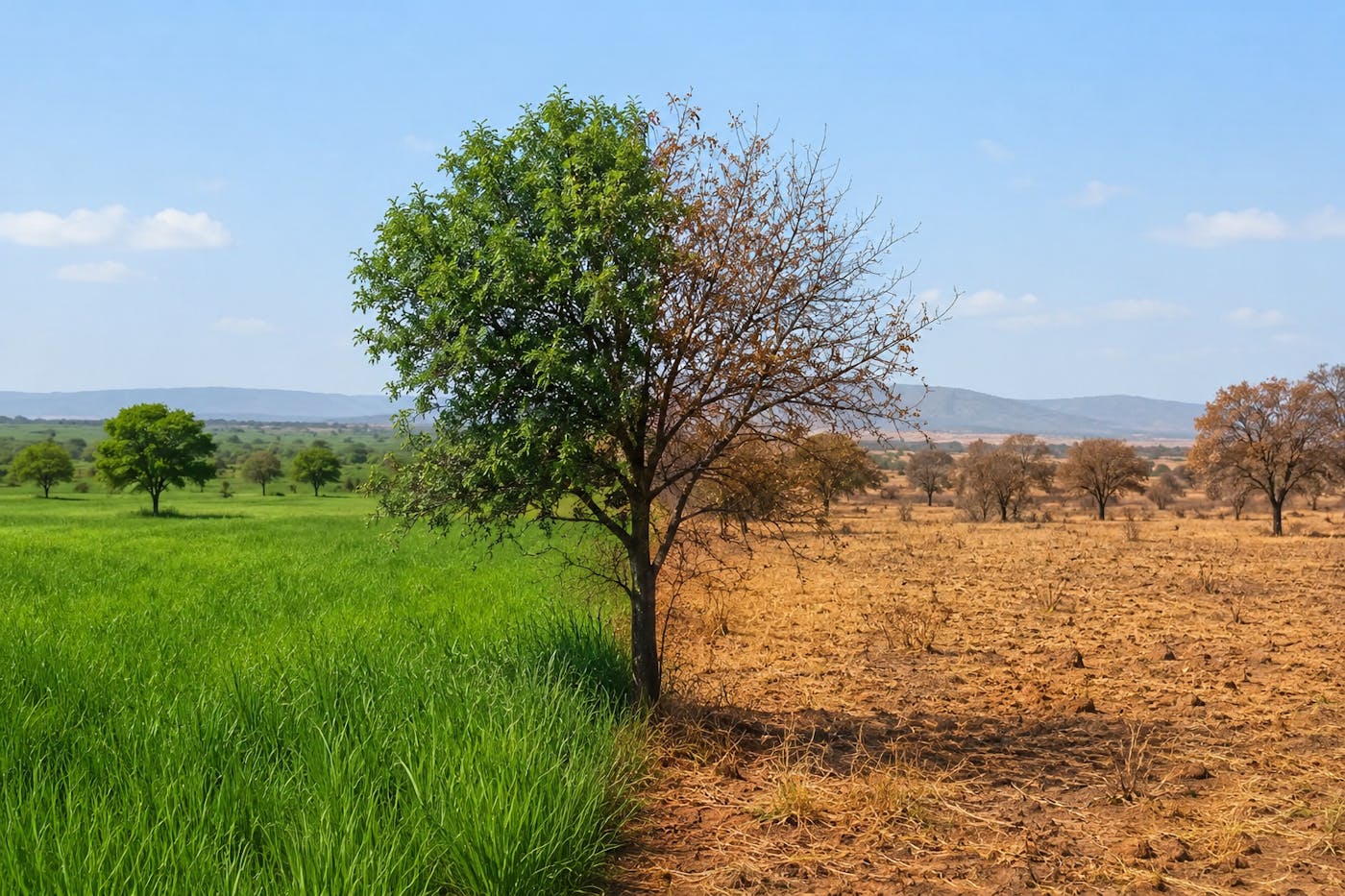
Beneath Eswatini’s green landscapes, a hidden climate threat is emerging as experts warn that declining soil moisture, despite normal rainfall, could silently undermine agriculture, ecosystems, and food security through the growing risk of green drought.
There is more to Eswatini’s lush green scenery than meets the eye.
While many may be under the impression that the current rains in the country is the answer to many farmers, agriculture experts have stated that this might be debatable- and in fact, that Eswatini may be under a green drought.
According to the Institute of Development Studies, a green drought, also known as a vegetation drought, occurs when there is enough rainfall to keep vegetation green, but not enough to adequately replenish soil moisture, leading to water stress for plants.
It further explains that green droughts are characterised by stunted plant growth and reduced crop yields, making them challenging to detect and diagnose. Contributing factors include uneven rainfall patterns, high temperatures, shallow-rooted plants, and soil compaction, which hinders water from reaching down to the root zone.
Speaking to a local agriculture scientist on condition of anonymity, he said a green drought was determined by crop yields and livestock health. Explaining to our reporter, the scientist in the case of Eswatini, the green drought was felt in the different regions.
“In the Highveld and upper Middleveld regions, they may have higher yields because there were decent rains in those parts of the country. However, in the Lowveld, the rains came too late and the crops were damaged by the heatwaves. In this case, we can safely say the Lowveld region experienced the effects of the inconsistent rains hence pointing the area to a green draught zone.
“When it comes to livestock- the country is still safe. These rains ensure that grass grows hence healthier grazing land for marketable livestock,” explained the agriculture expert. When sought for comment, Climate Change Expert and Nationally Determined Contributions (NDC) Eswatini In-Country Facilitator Nqobizwe Dlamini first explained that a green drought was a phenomenon where there is a lack of water, but it was not immediately obvious because the vegetation was still green and appeared healthy. He stated that this happened when the available water was insufficient to sustain the environment, particularly agriculture.
“Environmentalists can identify a green drought by measuring several key indicators including soil moisture, groundwater levels, stream and river flow, evapotranspiration, and vegetation health,” explained the Climate Change Expert. Dlamini said Eswatini did not have up-to-date data to determine if the whole country was in the middle of a green drought.
When asked about the means Eswatini could do to mitigate the silent crisis, Dlamini said policymakers could take several steps to raise awareness of green droughts.
“Public education campaigns through the media, workshops, and community outreach programs to educate people about the concept of green droughts and their potential impacts on agriculture and the environment would be impactful.
“Also, there is a need for monitoring and data collection to establish comprehensive monitoring systems to track soil moisture, groundwater levels, and other relevant environmental data. By publishing this data, policymakers can help highlight the hidden risks of a green drought. “We need to collaborate with scientists and environmentalists and work closely with experts in climate science, agriculture, and environmental monitoring to improve understanding and response strategies,” emphasized the Climate Change Expert.
He also explained that there was a need to develop early warning systems- stating that they encouraged the development of early-warning systems that could detect shifts in water availability, even when traditional signs of drought are not apparent. "Lastly, there is a pressing need to promote sustainable water practices, support policies that encourage water conservation, sustainable agricultural practices, and the use of drought-resistant crops.”