MTN Joins Climate Action, Unleashes Youth Innovation for a Greener Eswatini
By Phumelele Mkhonta · September 3, 2026
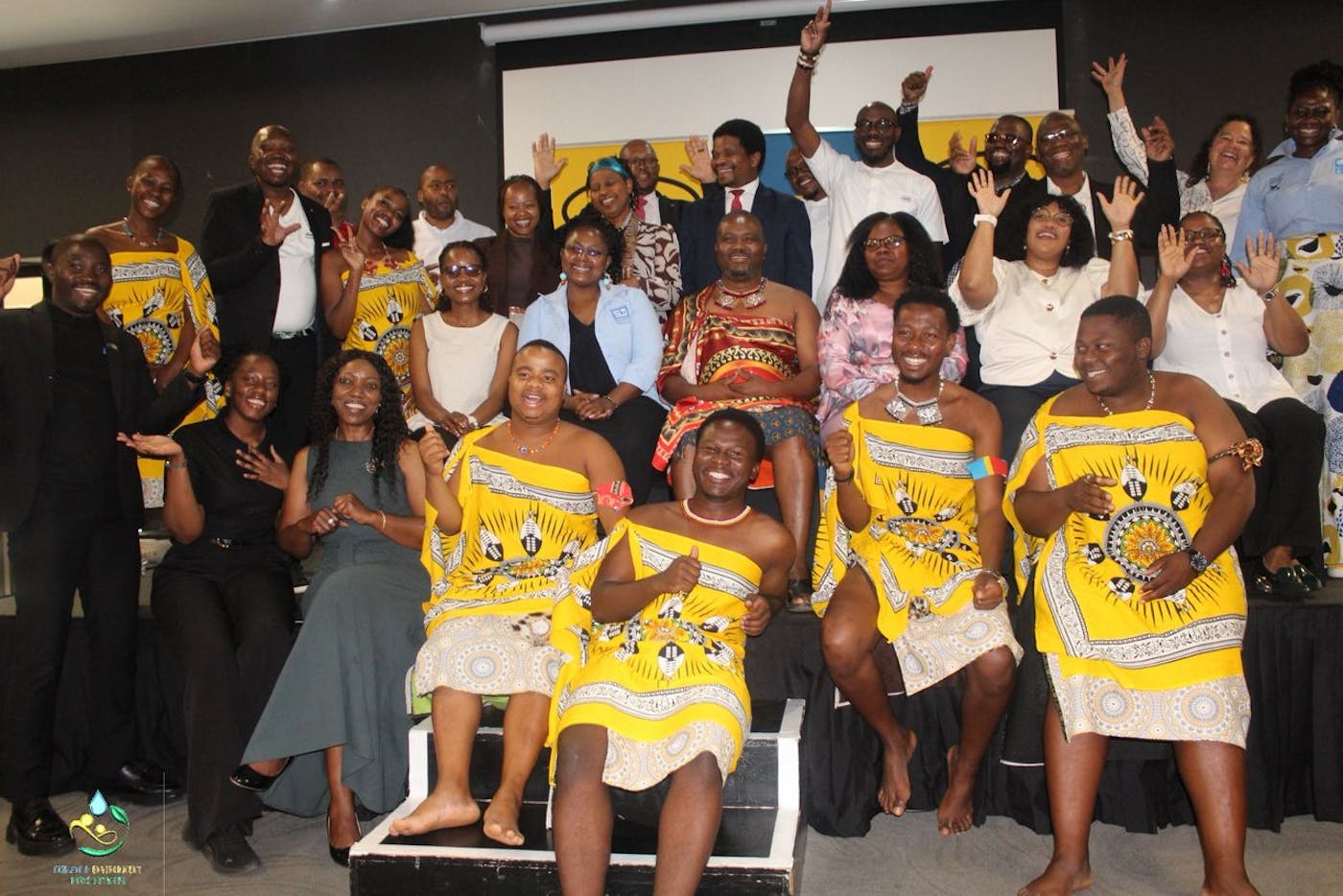
Climate challenges are becoming a launchpad for youth innovation, green enterprise and a more resilient Eswatini.
When nature meets innovation, environmental challenges can become the foundations of new businesses, stronger communities and a greener economy.
This was the message as MTN Eswatini officially launched the Eswatini PachiPanda Challenge- Likhambi Lemvelo, opening applications for young innovators to develop practical solutions to some of the country’s most pressing environmental and economic challenges.
Speaking during the launch, MTN Eswatini Chief Executive Officer Jerry Soko described the initiative as more than a competition. He said it marked the beginning of a wider national conversation about placing young people at the centre of climate action and sustainable development.
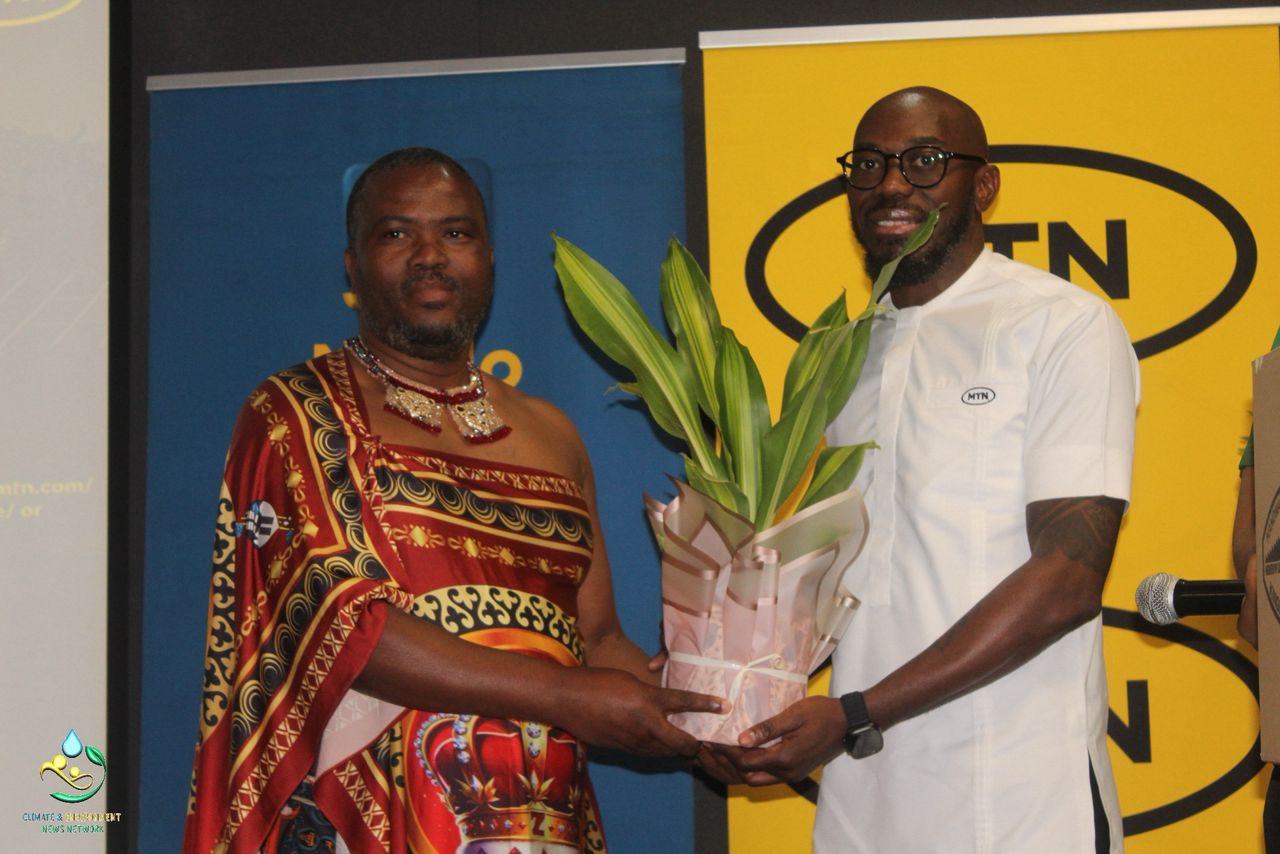 MTN Eswatinni CEO Jerry Soko (R) gifting the Minister of Tinkhundla Administration and Development Sikhumbuzo Dlamini during the launch.
“Today is not only the launch of a challenge. It is the launch of a national conversation,” Soko said.
“A conversation about how we can harness the creativity of Eswatini’s young people to solve some of the most pressing environmental and economic challenges facing our country.”
The challenge, implemented in partnership with Likusasa Letfu, is anchored in the theme: 'Nature Meets Innovation: Unlocking Africa’s Green Economy'.
It arrives at a time when Eswatini is experiencing growing environmental pressure. Farmers are confronting increasingly uncertain climate conditions, communities continue to face water-security challenges, natural landscapes require restoration, and the country must find sustainable responses to waste and energy demands. However, instead of treating these realities only as threats, the PachiPanda Challenge is inviting young people to see possibilities hidden within them.
“What is exciting is that these challenges are not being presented as problems alone,” Soko said. “Through the Africa PachiPanda Challenge, they are being presented as opportunities.”
Young innovators between the ages of 18 and 35, as well as youth-led businesses, are invited to submit solutions under four thematic areas: reimagining food and farming; securing Eswatini’s water future; restoring nature while creating opportunity; and transforming waste and energy challenges into economic opportunities.
From the applications received, an independent selection committee will identify 20 participants for an intensive one-week Green Innovation Accelerator Programme. The accelerator will equip the selected innovators with the skills, mentorship and business-development support needed to strengthen their ideas.
Ten finalists will then advance to the National Pitch Day, where they will present their solutions before three national winners are selected.
The first-place winner will receive US$5,000, while the second- and third-place winners will receive US$3,000 and US$2,000 respectively. The three winners will also represent Eswatini at the regional Africa PachiPanda Challenge, taking local green innovation onto a continental platform.
Importantly, the initiative has been designed to extend beyond prize-giving. Finalists will continue receiving incubation, mentorship and business-development assistance intended to help transform promising concepts into sustainable enterprises. According to Soko, this long-term support is what distinguishes the initiative from an ordinary innovation contest.
“It is a platform that identifies potential, develops capability, and creates pathways for young innovators to turn ideas into businesses that generate both economic and environmental value,” he said.
The challenge also reflects MTN Eswatini’s broader commitment to enabling the benefits of a modern connected life while supporting a new generation of changemakers. By connecting youth innovation with environmental action, the company is stepping into a space where technology, entrepreneurship and nature can work together. Soko challenged young Emaswati to examine the environmental problems within their own communities, and to look again, with entrepreneurial eyes. “What challenge do you see? What opportunity do others overlook? What solution can you create?” he asked.
Whether their interests lie in climate-smart agriculture, water stewardship, ecosystem restoration, recycling, clean energy or the circular economy, young innovators have been encouraged to bring forward bold and ambitious ideas.
“The future of Africa’s green economy will not be built in boardrooms alone,” Soko said. “It will be built by innovators. By entrepreneurs. By dreamers who are prepared to act.”
Through Likhambi Lemvelo, MTN Eswatini is planting more than the seed of a competition. It is cultivating a generation that can turn climate pressure into possibility, waste into wealth and ideas into enterprises.
As Soko concluded: “Together, let us prove that when nature meets innovation, extraordinary possibilities emerge.”